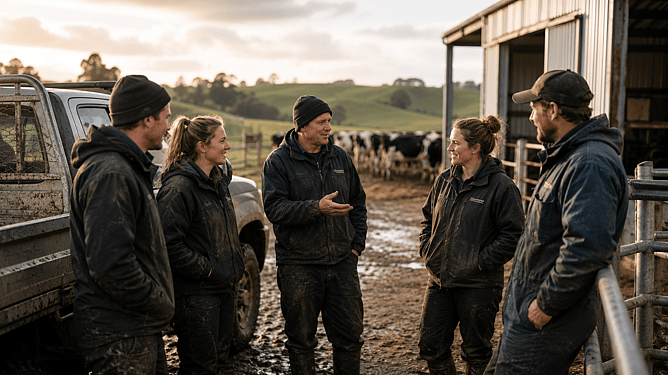
Not every farm has new people arriving on 1 June. Some teams roll into the new season with the same familiar faces, the same houses occupied, the same roster, and the same people doing largely the same roles.
That can feel easier — and often it is. But it can also create a risk.
When a team has been together for a while, it is easy to assume everyone is on the same page. Expectations become unspoken. Little frustrations get carried forward. Roles shift gradually. Routines continue because “that’s how we’ve always done it”. And before long, the new season starts without anyone really stopping to reset.
Even with the same team, a new season is a useful opportunity to pause, check in and realign.
What has changed, even if the people have not?
The people may be the same, but the business may not be.
Stock numbers may have changed. The farm system may be shifting. Someone may be taking on more responsibility. A roster that worked last season may not be as practical this season. A team member’s personal circumstances may have changed. The expectations around communication, time off, housing, technology, vehicles or reporting may need a refresh.
Sometimes the biggest changes are gradual.
A person who started as a farm assistant may now be doing more 2IC-type work. A manager may be carrying more people leadership responsibility. A relief milker may be working so regularly that the arrangement needs reviewing. Someone may have taken on extra duties during a busy period that have now quietly become part of their usual role.
If the role has shifted, the conversation and paperwork may need to shift too.
Reset the expectations before the pressure comes on
June is a good time to have a team reset conversation — before calving pressure, fatigue and long days make communication harder.
This does not need to be complicated. It could be a short team meeting or a series of one-on-one conversations.
Useful topics to cover include:
What worked well last season?
What do we want to do differently this season?
Are roles and responsibilities still clear?
Does the roster still work?
Are there any pressure points we already know are coming?
Are our communication habits helping or frustrating us?
Are we recording hours and leave properly?
Is everyone clear on health and safety expectations?
Are there any training, development or progression goals we should talk about?
Are there any small issues we should tidy up now?
The value is not just in the answers. It is in making space for the conversation before small issues become bigger ones.
Do the documents still match the reality?
A new season is also a good time to check that employment documents are still accurate.
Position descriptions should reflect what people are actually doing. Employment agreements should match the current role, pay, hours, roster and benefits. Accommodation arrangements should still be clear. Any agreed changes should be recorded properly rather than left sitting in a text message thread or a verbal conversation.
This is especially important where someone’s role has grown over time.
If a team member is now supervising others, taking responsibility for parts of the farm system, covering more weekends, managing calves, handling machinery, or stepping into leadership tasks, that should be properly acknowledged and documented.
Clarity protects both sides.
Do not let “good people” run on autopilot
Long-standing employees are often the backbone of a farming business. They know the farm, understand the routines, and quietly carry a lot of knowledge.
But good people still need communication, feedback, recognition and development.
A same-team reset is a good opportunity to ask: “What do you want from this season?”
For one person, progression might mean more responsibility. For another, it might mean more confidence in a particular area. For someone else, it might mean a better roster, clearer boundaries, more training, or simply feeling more heard and valued.
These conversations can make a big difference to retention. People are more likely to stay engaged when they can see that their contribution is noticed and their goals matter.
Same team does not mean same season
Even if no one new has arrived, the season ahead will bring its own challenges. Taking time now to reset expectations, tidy up documents, review roles and have honest conversations can help the team start the season with more clarity and less baggage.
It is easy to put these conversations off because everyone already knows each other. But that is exactly why they matter.
A new season is a natural opportunity to say: what are we carrying forward, what are we changing, and how do we want to work together from here?

