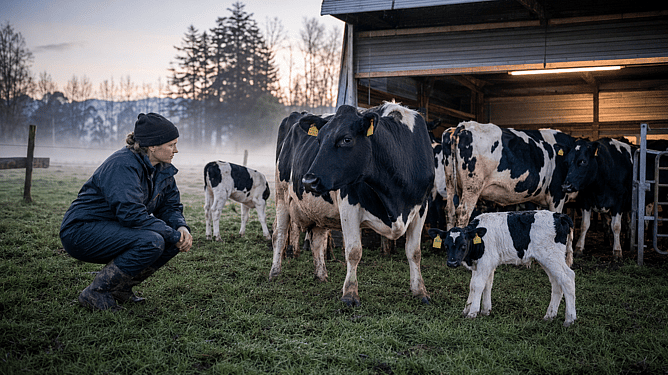
Every dairy farmer knows calving is demanding. Early starts, broken sleep, unpredictable call-outs, cold weather and a relentless list of jobs come with the territory. But there is a difference between a busy season and a workplace running on exhaustion.
Fatigue is not just about feeling tired. It affects concentration, communication, judgement, reaction time and mood. On farm, that can show up as missed steps in a routine, poor decisions around animals or machinery, short tempers, near misses, or a team member who simply stops functioning at their usual level.
WorkSafe treats fatigue as a risk that businesses may need to manage, just like other health and safety risks. That means 'everyone knows calving is hard' is not really a plan.
Look at the roster on paper - and what is actually happening
A roster can look reasonable until reality arrives. A difficult calving, sickness in the team, machinery trouble or repeated night call-outs can quickly turn an acceptable week into an unsafe one.
Managers need visibility of the hours people are actually working, not just the hours they were expected to work. This matters for fatigue, but also for pay compliance. The minimum wage applies to every hour worked, including for salaried employees, so accurate records become especially important when the hours stretch.
Useful questions to ask each week include:
Who has had the most broken sleep or after-hours call-outs?
Are people getting their rest and meal breaks in practice?
Has anyone quietly worked well beyond the rostered hours?
Are there high-risk jobs we can move, share or delay?
Does anyone need a later start, an earlier finish or genuine recovery time?
Watch for behaviour changes, not just yawning
Fatigue does not always announce itself neatly. It may look like irritability, forgetfulness, poor communication, unusual mistakes, reduced patience, slower reactions, or someone becoming unusually quiet. That makes regular check-ins important. A quick 'How are you travelling?' is useful, but a more specific question often gets a more useful answer:
How much sleep have you had over the last couple of nights?
Is your current workload still manageable?
What can we take off your plate today?
Are you safe to do that job right now?
Set the tone from the top
Team members take their cues from the people leading them. If the manager skips meals, works every hour available and treats exhaustion as a badge of honour, others are unlikely to speak up when they are struggling.
Good leadership during calving is not about removing every hard day. It is about keeping the pressure visible and manageable. Encourage breaks. Rotate demanding work. Keep water and decent food available. Avoid putting the most fatigued person onto the highest-risk task. Thank people for speaking up early rather than waiting until something goes wrong.
Calving will always ask a lot of people. The goal is not to make it easy. The goal is to get everyone through it safely, fairly and still speaking to each other at the end.

