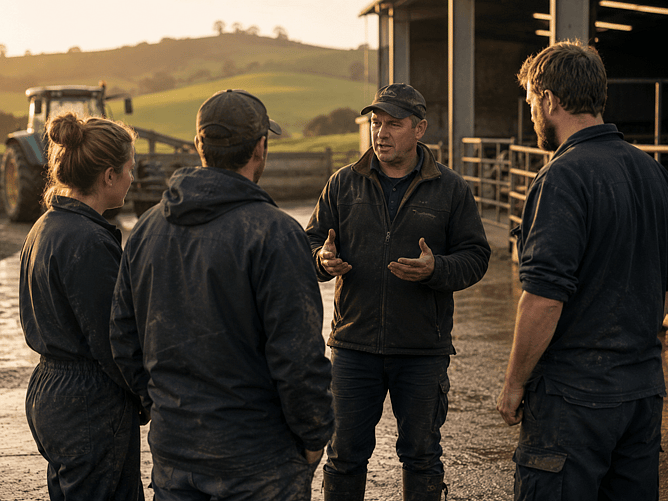
In rural businesses, people are often promoted because they are excellent at the practical or technical work. They know the farm. They understand the stock. They can operate the machinery, solve customer problems, organise deliveries or make sound technical decisions. They are dependable, capable and trusted - so the next step seems obvious: put them in charge of other people.
But doing the work well and leading other people to do it well are different skills. A new farm manager or 2IC, team leader or supervisor may suddenly be expected to set standards, delegate, give feedback, manage tension, make decisions and hold former peers accountable. Often, no one has clearly explained how much authority they have or shown them how to handle those conversations.
Do not mistake confidence for readiness: some new managers step forward confidently but need help slowing down, listening and bringing others with them. Others know the work inside out but avoid giving direction because they do not want to upset the team.
Both need support. Useful foundations include:
Clear decision-making authority: what can they decide, and what needs to be escalated?
A shared understanding of the standards they are responsible for maintaining.
Practical coaching on delegation, feedback and difficult conversations.
Regular check-ins with their own manager, not only when something has gone wrong.
Backing from senior leaders when they make a reasonable call within their authority.
This applies just as much to a stock manager, shepherd or feed-store team leader as it does to a dairy farm manager or 2IC. The technical setting changes; the people challenge does not.
Promoting good people is an investment. Giving them a title and hoping they work the rest out is not.


